Few tartans are seen by more people than the red one wrapped around a box of Walkers Shortbread — a Speyside biscuit, "established 1898", sold the world over in its tartan livery. In 2016 Walkers registered that packaging as a UK trade mark (UK00003180795), and the device shows the tartan plainly.
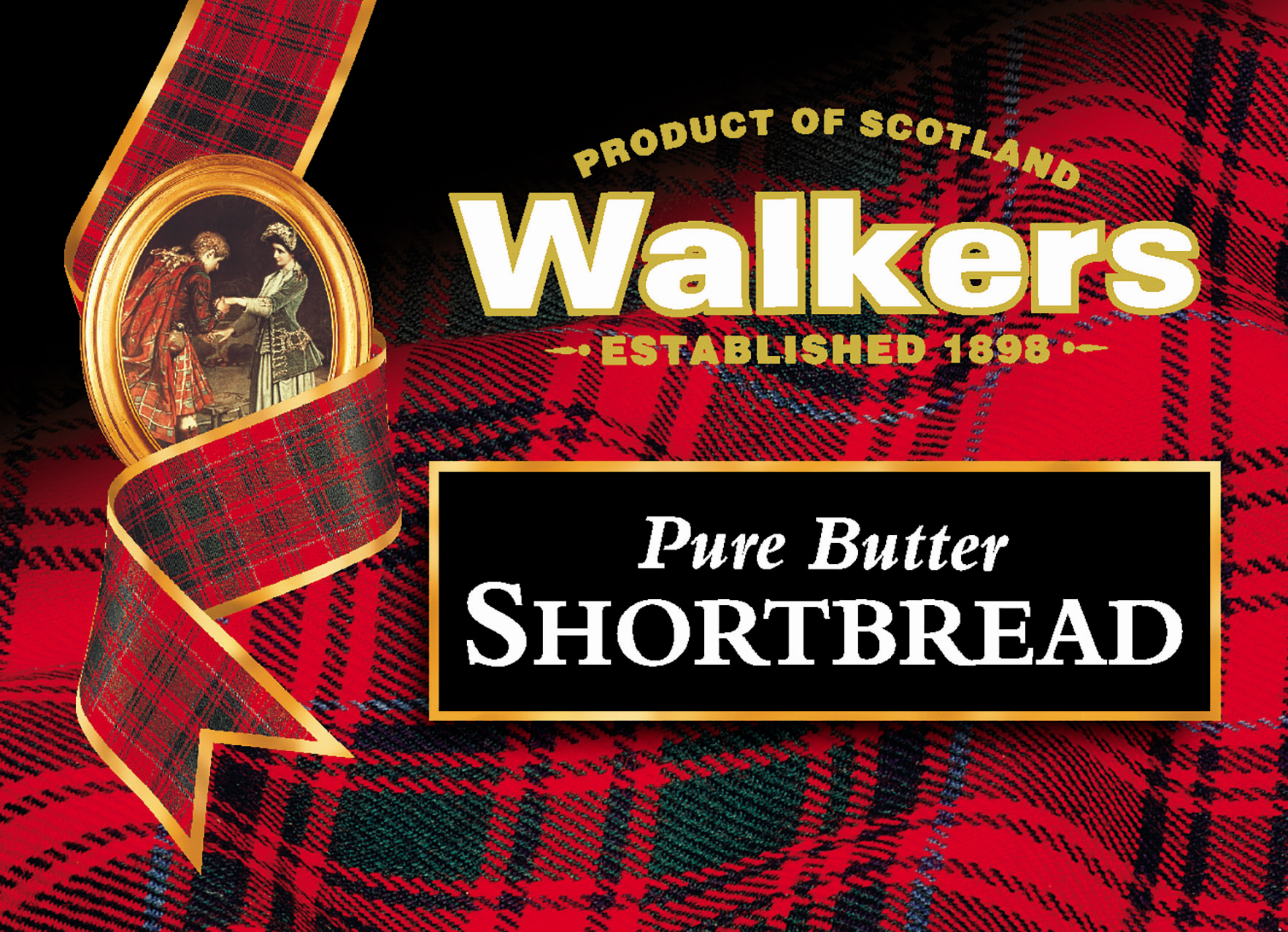
It is usually called Royal Stewart, but a glance at the cloth is enough to doubt that — the ground is right, but the green blocks are too large and there is no white overcheck. So the question for this post is the narrow, hands-on one: what is the sett?
Reading it by hand
The trade-mark image is a photograph of folded cloth, not a flat swatch, so it cannot simply be machine-read. I worked it the slow way: flattened the folds by tracing the warp and weft lines and straightening them, then counted the cloth strip by strip in a zoomed view, fixing each band's colour and width into a thread count. The reading is:
R/12 DB5 R5 DG30 R5 DP4 R5 DG12 R6 LB3 R40 DB5 R6 DB6 R/16 (reflective)
R = red · DB = navy · DG = bottle green · LB = azure · DP = a fine purple overcheck
Woven from that thread count, the sett is:
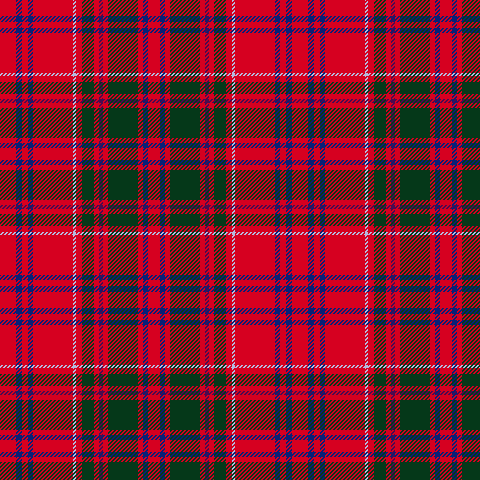
It is a Grant
With the sett in hand the identity settles, and it is not Stewart at all: it is Grant — a red ground carrying broad bottle-green blocks with navy and azure guards. That fits its home: Walkers bake at Aberlour on Speyside, in the heart of Grant country, so the firm wraps its shortbread in the local clan's cloth. The recovered sett is recorded in the Dictionary as Walkers Shortbread.
For the method, see The Tarim Tartan and The Falkirk Tartan, where a sett is worked from an image by hand; and What is Tartan? for what a sett and a thread count are.